
Reframing 45Q Plus a Case History of Large Volume Injection – May 2023
Annual CO2 Conference Has Transformed Over The Years
As interested parties from across the Permian Basin, across the state, across the country and even across the globe gather at Midland Center this week for the 21st CO2 Conference, climate talks are continuing in Paris. Read more: Annual CO2 Conference has transformed over the years – MRT.com: Top Stories Or visit the CO2 Conference website for more informationUnder […]
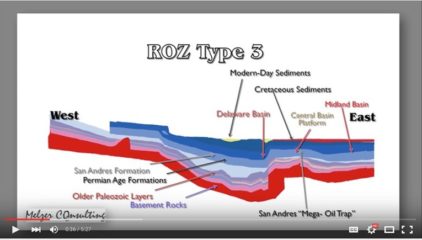
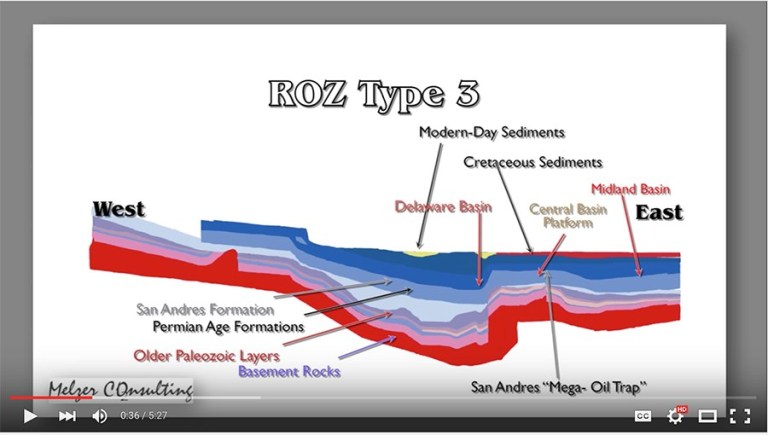
Residual Oil Zone Type 3
What we’re doing here is we’re going to demonstrate the origin of the predominant type of residual oil zone in the Permian Basin. This is our source for the next generation of CO2 EOR production for oil. What we’ve got is a cross-section that we have adopted here in the Permian Basin. This would be […]
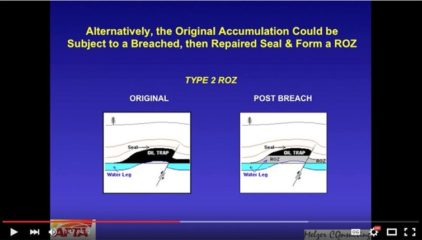
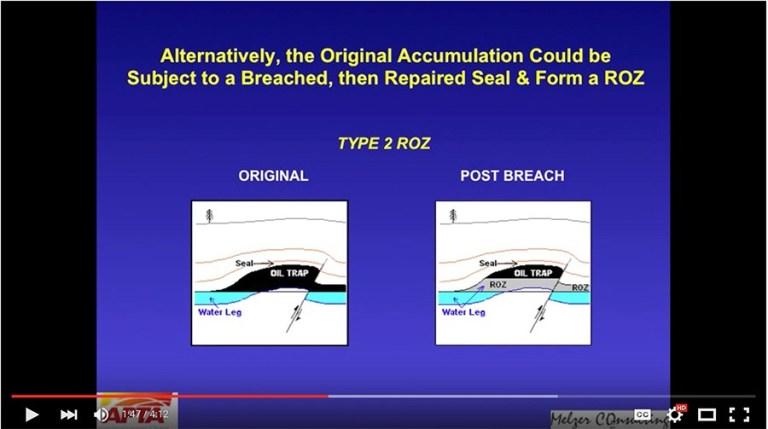
Residual Oil Zone Type 2
The oil and gas industry has learned in recent years that oil entrapments may have undergone some changes in their geologic past. It isn’t proper in many basins to think that the original stage of tectonics, which includes: burial, oil generation, and migration into a structurally high trap, might not have been altered by a […]
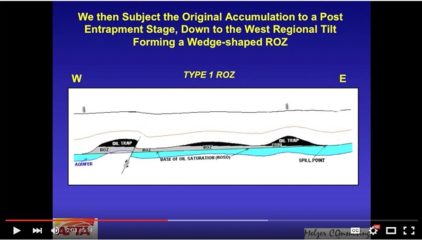
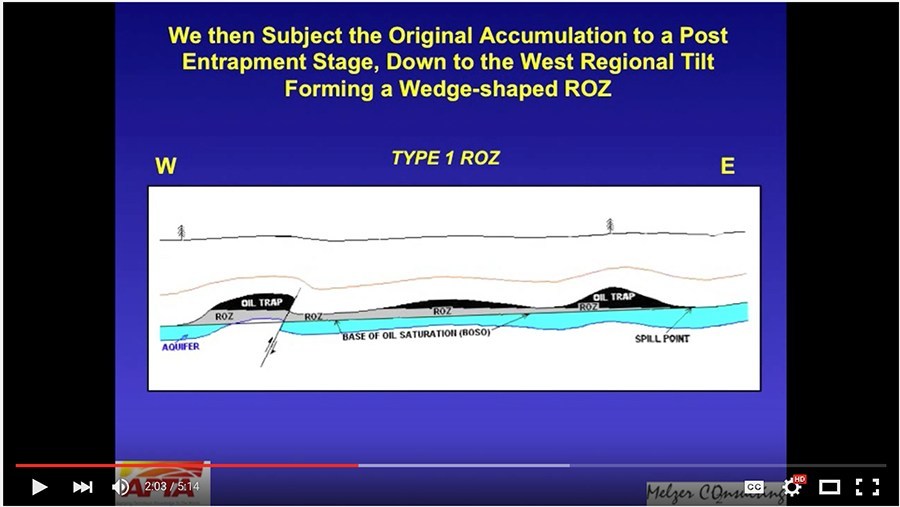
Residual Oil Zone Type 1
The oil and gas industry has come to recognize now that oil reservoirs and the sub-surface can undergo multiple stages of tectonics beyond the original one, which involves burial, oil generation in the original entrapment stage where oil moved into a structurally high trap in the sub-surface. Those multiple stages of tectonics can take one […]
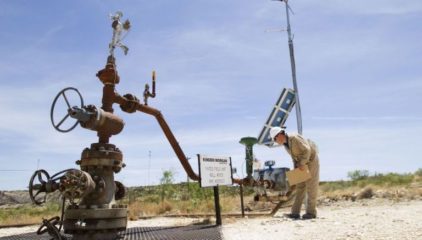
Technology Indicates Permian May Have Triple The Oil Believed In Place
Technological advances are rewriting what experts thought they knew about Permian Basin oil fields. None more so than work now being done on residual oil zones, experts say. Read more: Technology indicates Permian may have triple the oil believed in place – MRT.com: Oil & Gas http://www.mrt.com/business/oil/article_3da8fdae-8250-11e4-9fa8-3f1ac6ad1af9.html#ixzz41IV28aWb Under Creative Commons License: Attribution
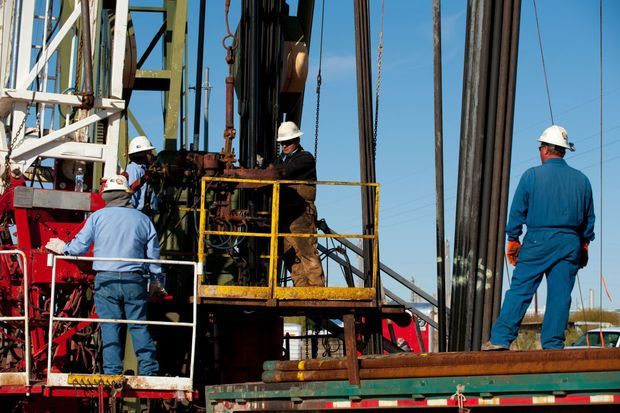
Significant San Andres play emerging amid ROZ fairways
Read more: Significant San Andres play emerging amid ROZ fairways – MRT.com: Oil & Gas http://www.mrt.com/business/oil/article_78b6c13a-16a5-11e5-b0c9-833e5c575a0b.html#ixzz41IO53wq2Under Creative Commons License: Attribution Research in the massive living laboratory that is the Permian Basin has unlocked unexpected sources of crude oil and natural gas for decades.